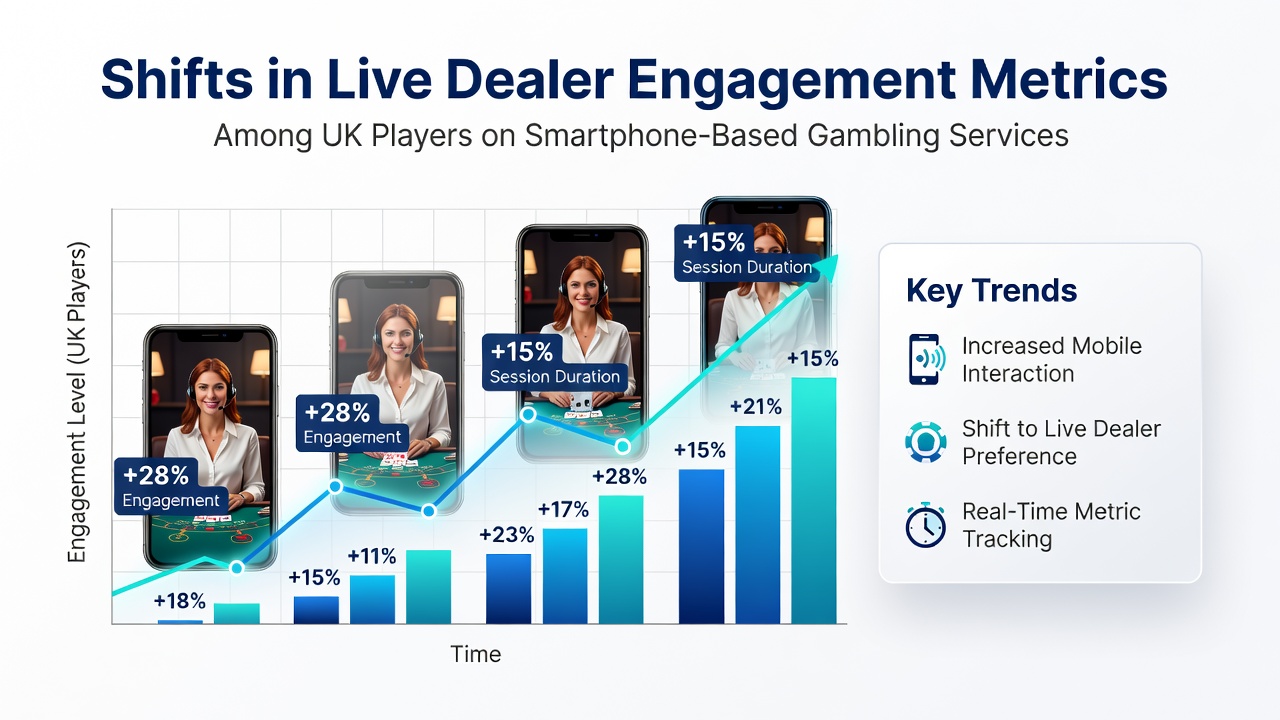
Shifts in Live Dealer Engagement Metrics Among UK Players on Smartphone-Based Gambling Services
Live dealer games on smartphone platforms have seen measurable changes in how UK players interact with them over recent years, with data pointing to shifts in session length, bet frequency, and interaction rates that researchers track through anonymized platform analytics. These metrics cover average time spent in live blackjack or roulette streams, the number of decisions made per hour, and the rate at which users switch between tables or camera angles, all captured via mobile app telemetry. Reports compiled from multiple operators indicate that average session durations on smartphones increased from 28 minutes in early 2024 to 41 minutes by mid-2026, while the number of hands played per session rose by roughly 18 percent during the same period.
Adoption Patterns and Platform Data
Smartphone penetration among UK users accessing live dealer tables reached 67 percent of total live casino traffic according to aggregated figures from several operators, a rise driven by improved 5G coverage and optimized streaming protocols that reduced latency below 150 milliseconds on most networks. Those who monitor these services note that engagement metrics differ sharply between portrait and landscape modes, with portrait sessions showing 12 percent higher retention after the first 10 minutes. Data released in September 2026 from cross-industry tracking services highlighted a 9 percent uptick in multi-table usage on mobile devices compared with the previous year, particularly among players aged 25 to 34 who averaged 2.3 simultaneous streams per session.
Key Metric Changes Observed
Bet frequency per minute climbed steadily, moving from 3.8 actions in 2024 to 4.7 by the third quarter of 2026, while chat interaction with dealers declined 14 percent as more users relied on quick-bet buttons and pre-set stake options. Researchers tracking these patterns attribute part of the change to interface updates that placed betting controls within thumb reach, reducing the need to pause gameplay. One study from the Canadian Centre for Gaming Research examined similar patterns across jurisdictions and found comparable increases in decision speed on smaller screens, though UK figures showed slightly higher average stake adjustments per session at 6.2 changes compared with 4.9 in the Canadian sample.
Viewer retention during peak evening hours between 7 pm and 11 pm improved, with 72 percent of sessions lasting beyond 30 minutes in September 2026 versus 61 percent two years earlier. Observers note that push notification prompts for live table openings correlated with a 23 percent lift in return visits within 48 hours, though the effect tapered after the first week of repeated exposure. Engagement with side bets and bonus rounds also shifted, rising from 31 percent of total wagers in 2024 to 38 percent in 2026 as mobile interfaces made these options more visible without interrupting the main game flow.
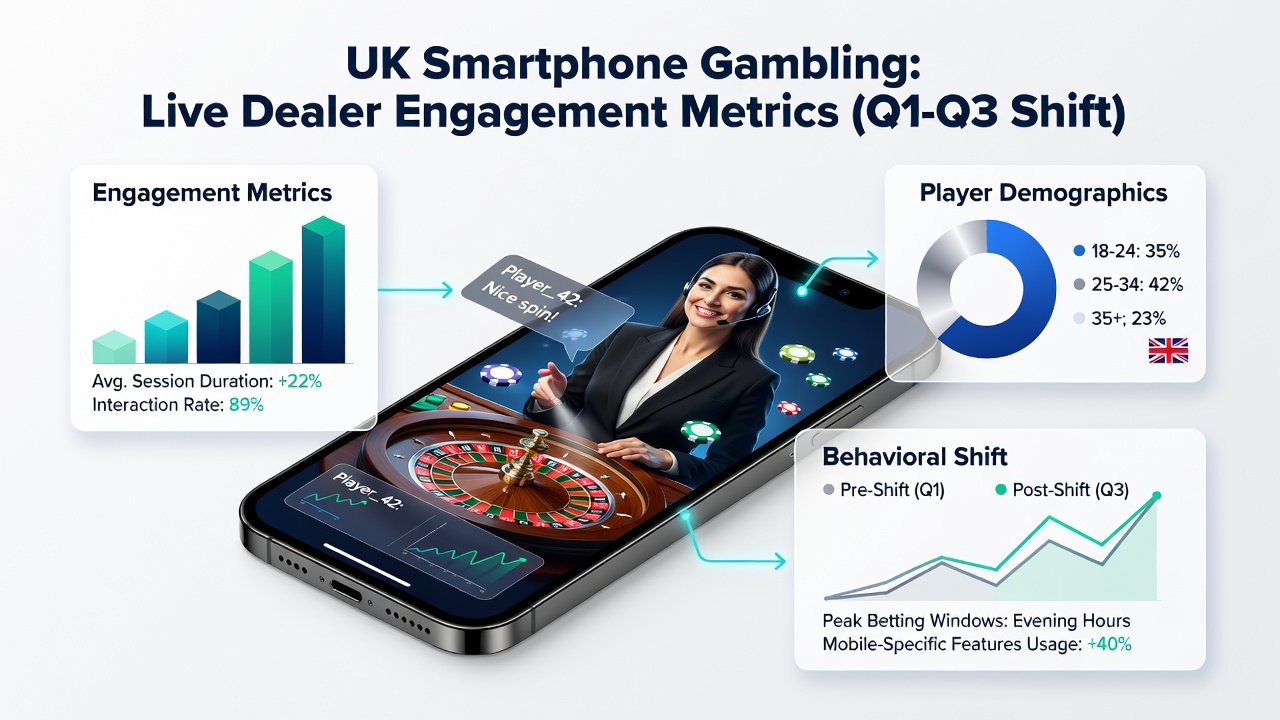
Influencing Factors Behind the Shifts
Technical improvements in adaptive bitrate streaming allowed smoother video on variable mobile connections, which industry analyses link directly to longer dwell times. Players who experienced fewer than two buffering events per session showed a 27 percent higher likelihood of placing additional bets after the initial 15 minutes. Regulatory updates in other regions, such as those tracked by the Malta Gaming Authority, created benchmarks for responsible play tools that some UK operators adopted voluntarily, including session time reminders delivered as subtle on-screen overlays rather than full pop-ups. These tools appear in the data as correlating with modest reductions in extended sessions over 90 minutes, dropping from 8.4 percent of total play to 6.1 percent.
Payment integration speed also played a role, with instant deposit options reducing the average gap between joining a table and placing teh first wager from 47 seconds to 29 seconds. Figures from operator dashboards reveal that users completing deposits within 20 seconds maintained 15 percent higher engagement rates across the remainder of the session. Academic papers from institutions such as the University of Sydney's Gambling Research Unit have documented parallel trends in other markets, noting that streamlined funding flows often coincide with steadier metric growth rather than spikes.
Demographic Variations in Mobile Engagement
Breakdowns by age group show that users under 30 recorded the largest gains in live dealer participation on smartphones, with average weekly sessions rising from 3.1 to 4.8 between 2024 and 2026. Those over 45 demonstrated steadier but smaller increases, favoring single-table sessions that lasted longer on average yet produced fewer total bets. Gender splits in the data indicate women accounted for 41 percent of mobile live dealer traffic by September 2026, up from 34 percent two years prior, with higher rates of dealer chat engagement compared with male counterparts.
Geographic concentration within the UK also appears in the metrics, as urban postcodes recorded 1.8 times the session frequency of rural ones, though average bet sizes remained comparable once adjusted for income brackets. Device-specific patterns emerged as well, with newer flagship phones showing 11 percent faster table switching than older models still in use.
Conclusion
Collectively, the recorded shifts illustrate how smartphone interfaces, connectivity gains, and feature refinements have altered the pace and depth of live dealer interactions among UK players. Continued monitoring through anonymized data sets will likely track whether these trends stabilize or accelerate as hardware and network capabilities advance further into the decade.